The secret confirmed: When modern neuroscience and the genetic code meet biblical truth
We live in a world that demands proof. A world that runs on tangible knowledge, measurable data, and what we can see with our own eyes. In this context, the concept of “faith” – being convinced of things that are not seen – can look like an act of intellectual rebellion. But what if these two realms, faith and knowledge, are not in conflict, but are two sides of the same coin? What if modern science, instead of contradicting Scripture, is actually beginning to confirm truths that have been hidden in it for thousands of years?
Two kinds of knowledge: The limits of the world and the infinity of God
To understand faith, we first need to distinguish between two kinds of knowledge: worldly and divine.
- Worldly knowledge is the result of learning, experience, and perception. It is limited to what we can prove and reason out.
- Divine knowledge comes from the Word of God. It is a knowledge that transcends human logic.
The apostle Paul, in 1 Corinthians 3:19, makes a radical statement: “For the wisdom of this world is foolishness with God.” Any attempt by man to raise himself above his Creator is doomed to fail, because we operate within parameters He has already set. In contrast, the Bible offers a completely different definition of certainty. Hebrews 11:1 tells us:
“Now faith is assurance of things hoped for, proof of things not seen.”
To believe means to have an unshakable conviction that something will be, even when present reality offers no proof at all. It is a way of life that leads us to choose God’s will, even in the face of danger and sacrifice.
A code hidden in history: The mystery of Moses and the connection with Christ
Hebrews chapter 11 is a true “museum of faith,” presenting heroes such as Noah, Abraham, Sarah, and many others. Their lives are a testimony to how they acted on promises they did not see fulfilled in their lifetime. But this chapter hides an astonishing detail, a puzzle piece that links the Old Testament to the New Testament in a profound way. In Hebrews 11:26, it says of Moses:
“…considering the reproach of Christ greater riches than the treasures of Egypt…”
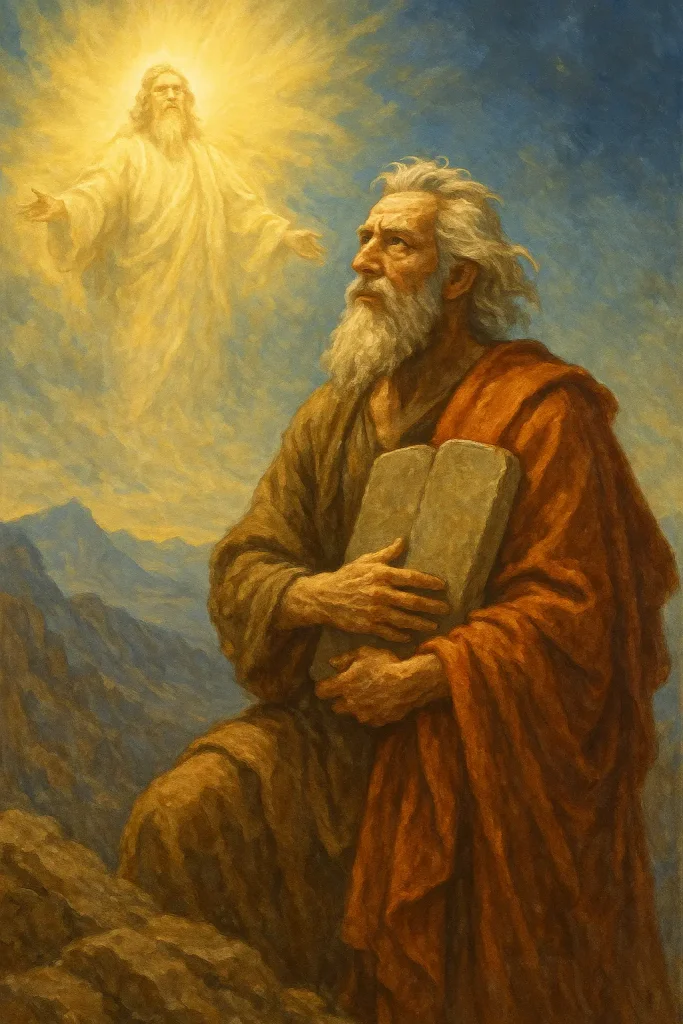
The obvious question is: How could Moses, who lived 1,500 years before Jesus, suffer “the reproach of Christ”? The answer is an extraordinary revelation that shows us Jesus was present and active long before He was born in Bethlehem. Let’s recall the episode in which Moses climbs Mount Sinai to receive the Tablets of the Law for the second time (Exodus 34). Scripture mentions an incredible detail:
“He was there with Yahweh forty days and forty nights; he neither ate bread, nor drank water.” (Exodus 34:28)
Modern science tells us that a person can survive only a few days without water. How was this possible for Moses? The secret lies in the presence he was in. John 1 tells us that “in the beginning was the Word… and the Word was with God.” Wherever God was, Jesus was too. Moses’ physical needs were suspended because he was in the presence of the ultimate source of food and water:
- Jesus is the Bread of Life: “Whoever comes to me will not be hungry.” (John 6:35)
- Jesus is the Living Water: “Whoever drinks of the water that I will give him will never thirst again.” (John 7:37)
Moses did not need earthly food or water because he was sustained directly by the divine presence of Christ. As a final confirmation, when Moses comes down from the mountain, “the skin of his face shone by reason of his speaking with him.” This scene is mirrored perfectly in the New Testament, on the Mount of Transfiguration, when “his [Jesus’] face shone like the sun” (Matthew 17:2).
When modern science confirms Scripture
It may sound like a beautiful story, but one that is hard for a skeptical mind to believe. Yet in recent years, researchers have begun to discover phenomena that resonate remarkably with biblical principles.
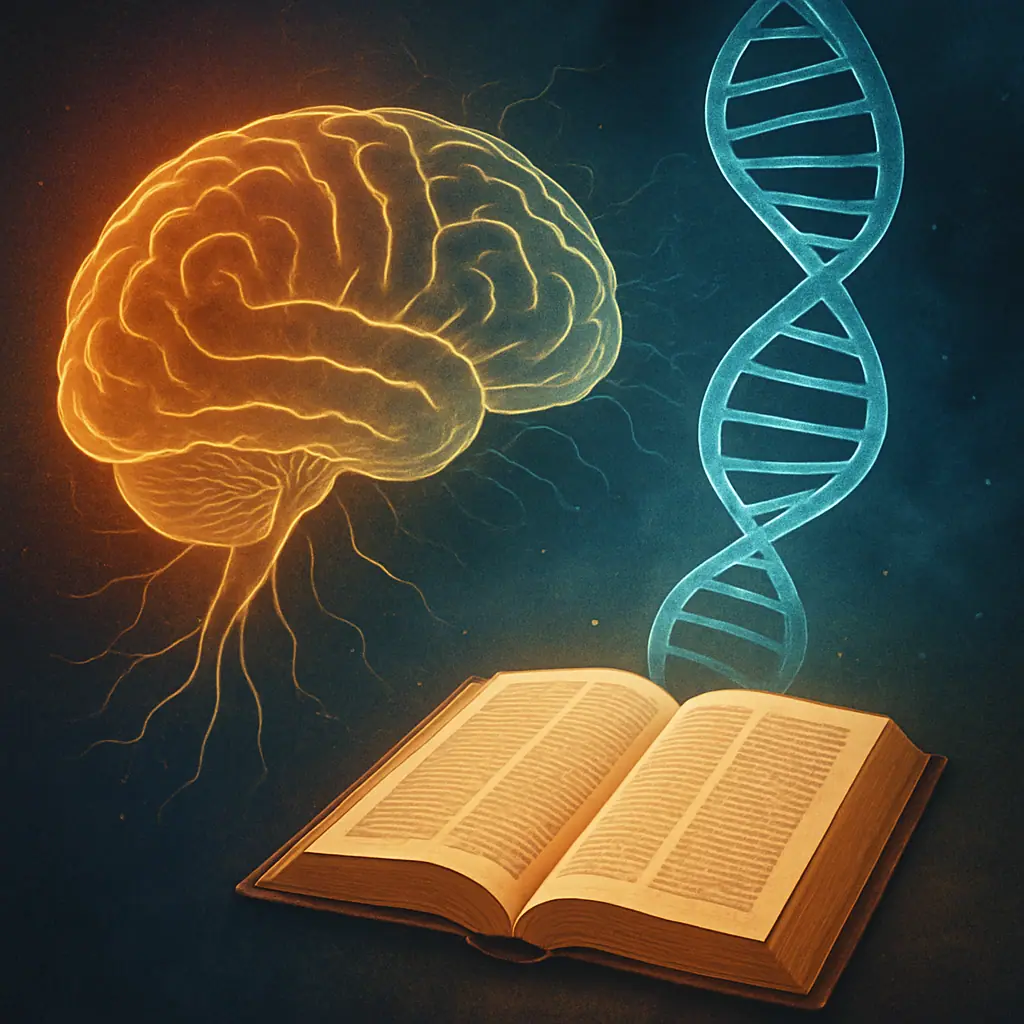
1. The power of prayer over the brain: A study published in the medical journal PubMed analyzed the effects of prayer on people with major depression. Using MRI scans, the researchers observed that after just six weeks of consistent prayer, brain activity had changed significantly. Negative thoughts, fear, and hatred produce toxins that destroy health, while prayer and positive thinking produce measurable healing effects in the brain and in the body.
2. The Creator’s signature in our cells: Another fascinating discovery is that of laminin, an essential protein that works like a glue holding the cells of our body together. Without it, we would literally be a little heap of dust. The shape of this vital protein, visible under the microscope, is that of a cross. Colossians 1:17 says of Jesus: “He is before all things, and in him all things are held together.” Modern science shows us, at the molecular level, a picture of this truth.
How do we live this out? From information to transformation
Knowing these things is fascinating, but living them is something else entirely. Faith is not mere intellectual agreement, but a transformation of the mind. You cannot live as a new creation with an old mindset. The world’s mindset will always keep you stuck within the limits of what can be seen.
How do you grow your faith?
You start small. A baby does not start with solid food, but with milk. It is the same in the spiritual life. You don’t have to “move Kilimanjaro” on your first try. Start training your faith in the small things:
- Believe for a headache to be healed.
- Believe for a parking spot when you’re in a hurry.
- Believe for a peaceful conversation with a difficult person.
These small victories build a solid foundation, training your faith “muscle” for bigger and bigger challenges. Our circumstances change the moment the words we speak, fueled by faith, line up with God’s promises rather than with visible reality.
Conclusion: Faith comes by hearing
In the end, it all comes down to a simple yet profound principle, stated in Romans 10:17:
“So faith comes by hearing, and hearing by the word of God.”
To have the faith that moves mountains, we need to fill our minds and hearts with the right knowledge – the Word of God. This is the foundation that teaches us everything we need to navigate this world and live in the victory God has prepared for us.
We encourage you to put this principle to the test. Try believing in the things that are not yet seen, relying on what God has said, not on what the world shows you. You will discover that moving forward in the plan He has for your life depends, to a large extent, on your choice to believe.